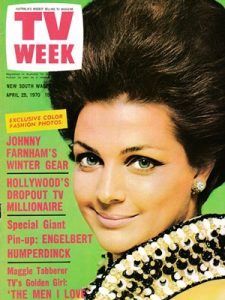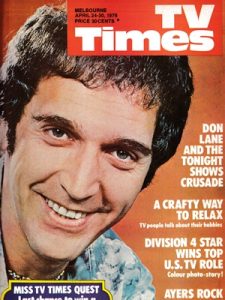
The decade where greed was good… and television was leading the way. Huge sums of money were spent on expensive productions, huge pay packets and improved technology and production values. Australian TV still couldn’t quite match the glamour of the Americans, so it was a soap set in middle suburban Australia that put it back in the world spotlight.
1980:
- January 20: Melbourne’s ATV0 changes to ATV10. The 0-10 Network changes its name to Network Ten. The new-look network launches its expensive evening soap opera Arcade, from the same producers of the successful Number 96. Costing the network $3 million to produce, as well as one of the largest advertising campaigns ever mounted for a new series, it was rejected by viewers and was axed after 38 episodes.
- May: The Australian Broadcasting Tribunal approves the sale of Brisbane channel TVQ0 to a joint venture between Ampol and Sydney radio station 2SM.
- The 1980 Moscow Olympics are televised on Seven, via satellite.
- July 14: Sale Of The Century, a remake of the 1970s Great Temptation hosted by Tony Barber and Victoria Nicolls, starts on Nine and becomes the big hit of the year.
- August: TV Times and TV Guide magazines are amalgamated into TV Week.
- September: The Australian Broadcasting Tribunal refuses the takeover of Melbourne channel ATV10 by Rupert Murdoch’s News Limited.
- October 24 (United Nations Day): Channel 0/28, the new TV channel of the Special Broadcasting Service (SBS), is opened in Sydney and Melbourne. Simulcast on both VHF channel 0 and UHF channel 28 frequencies, it is the first major broadcaster to use the UHF frequency band in Australia.
- TV Week Gold Logie Winner: Mike Walsh (The Mike Walsh Show, Nine)
1981:
- February 23: Good Morning Australia, with Gordon Elliott and Sue Kellaway (later replaced by Kerri Anne Kennerley), premieres on Ten.
- April 10: The TV Week Logie Awards are televised on Network Ten for the first time.
- July 27: Wheel Of Fortune, produced by Grundy Productions at the studios of ADS7 Adelaide, premieres.
- July 29: The wedding of Prince Charles and Lady Diana Spencer is televised on ABC and almost every commercial television station in Australia.
- September 16: Nine celebrates 25 years of television in Australia.
- November 15: The first edition of Nine Network current affairs program Sunday
-
Brian Wenzel and Lorrae Desmond, A Country Practice November: Seven premieres its new evening drama A Country Practice.
- December: After a two-year battle, Rupert Murdoch’s News Limited finally gains control of ATV10 Melbourne after appealing the decision by the Australian Broadcasting Tribunal which blocked the takeover.
- TV Week Gold Logie Winner: Bert Newton (The Don Lane Show and New Faces, Nine)
- January 18: Seven premieres drama series Sons And Daughters. The series, produced by Grundy Productions, becomes an immediate success in Australia and overseas and runs for six years.
- February: Rupert Murdoch’s Network Ten makes a successful $9.2m bid for the rights to televise the 1984 Olympic Games from Los Angeles. Ten was up against a Seven Network bid and a joint Nine Network-ABC bid.
- February: Nine launches early morning news bulletin National News Today. In June it is replaced with the National Today Show with Steve Liebmann and Sue Kellaway.
- Nine, Seven and ABC conduct test transmissions of programs in stereo sound.
- March 21: Former Melbourne newsreader Jana Wendt joins Nine’s 60 Minutes team as its first female reporter.
- July: ABC celebrates 50 years of broadcasting, and Nine’s The Mike Walsh Show celebrates 2000 episodes.
- September: ABC and Nine jointly televise the 1982 Commonwealth Games from Brisbane.
-
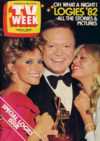
Bert Newton with Olivia Newton-John and Britt Ekland TV Week Gold Logie Winner: Bert Newton (The Don Lane Show and New Faces, Nine)
- March 10: The final episode of The Sullivans airs on Nine.
- March 30: The Young Doctors ends on Nine after a record-breaking 1396 episodes.
- April 22: The 25th Anniversary TV Week Logie Awards are telecast on Network Ten.
- April 24: The Eurovision Song Contest makes its Australian TV debut with a delayed telecast on Channel 0/28.
- October 14: Channel 0/28 becomes Network 0/28 and commences transmission in Canberra.
- October 29: The Seven Network and various regional stations broadcast a selection of movies and TV programs in 3D in a 2-hour experiment
- TV Week Gold Logie Winner: Daryl Somers (Hey Hey It’s Saturday and Family Feud, Nine)
- January: Alan Bond purchases STW9 Perth for just under $50 million.
- January 30: Ten launches its new afternoon game show Perfect Match with Greg Evans and Debbie Newsome, recording the highest ratings ever for the 5.30 timeslot.
- February 3-4: Ten produces Australia’s first national telethon, a 26-hour effort to raise funds for Australia’s Olympic athletes.
- February 18: Hey Hey It’s Saturday moves from its morning timeslot to the 9.30pm timeslot.
- June: Christopher Skase’s Qintex Group purchases Brisbane channel TVQ0.
- July: Ten televises the 1984 Los Angeles Olympics live via satellite.
- October 19: Current affairs program Dateline begins on Network 0/28.
- TV Week Gold Logie Winner: Bert Newton (The Don Lane Show and New Faces, Nine)
1985:
- February 11: Midday With Ray Martin replaces The Mike Walsh Show on Nine, with the latter moving to a prime-time format.
- February 18: Network 0/28 becomes SBS and commences daytime program transmission.
- March 4: ABC launches The National, a revamped news and current affairs format replacing the traditional 7pm state-based news bulletins and the former current affairs program Nationwide. The new format, costing the national broadcaster a budgeted $25 million, turned out to be an expensive failure and lasted less than twelve months..
- March 4: Seven’s affiliation to NBC and CNN news services in the United States leads to News Overnight, a nightly six-hour package of news and current affairs programming direct via satellite.
- March 18: Neighbours begins on the Seven Network. Six months later it is axed by Seven and soon picked up by Ten.
- June 8: Hey Hey It’s Saturday moves to the earlier evening timeslot of 6.30pm.
- June 30: SBS expands to Brisbane, Adelaide, Gold Coast, Wollongong and Newcastle.
- July 13-14: ABC televises the worldwide Live Aid event, featuring concerts held around the world.
- August 8: The final episode of The Mike Walsh Show, ending a 12-year run.
- August: The AUSSAT satellites are launched. In October ABC starts test transmission of its radio and TV networks via satellite to remote areas in rural Australia. The ABC service is officially inaugurated in January 1986.
- HSV7 screens a late night sketch comedy series The Eleventh Hour, featuring a number of performers who later appear in The Comedy Company and Fast Forward
- TV Week Gold Logie Winner: Rowena Wallace (Sons And Daughters, Seven)
- January 5: SBS ceases VHF transmissions on Channel 0 in Sydney and Melbourne, becoming the first sole UHF network in Australia.
- January 20: Neighbours begins on Ten and soon dominates the 7pm timeslot.
- March 16: SBS expands into Perth and Hobart.
- The 1986 Commonwealth Games are telecast live on ABC from Edinburgh, Scotland.
- October 27: Neighbours screens for the first time on the BBC.
- October 30: The Movie Show begins on SBS
- TV Week Gold Logie Winner: Daryl Somers (Hey Hey It’s Saturday and Blankety Blanks, Nine)
1987:
- March: The Herald and Weekly Times sells HSV7 to Sydney-based Fairfax Group, owner of ATN7 Sydney. The new management axes virtually all Melbourne-based programming from HSV7 in favour of networked programming from Sydney. Newsreader Mal Walden is axed from Seven National News and replaced by former STW9 newsreader Greg Pearce. The revamped Seven National News is snubbed by Melbourne viewers, with ratings as low as zero. Walden joins ATV10’s Eyewitness News to high ratings.
-

MTV April: ABC launches its overnight music video program Rage. Ten launches a similar program Nightshift and Nine launches its new music program MTV.
- July 19: The Countdown Music And Video Awards serve as the farewell for Countdown after a 13 year run on ABC.
- July 24: Christopher Skase’s Universal Telecasters purchases Seven Network stations ATN7 Sydney, HSV7 Melbourne and BTQ7 Brisbane from Fairfax for $780 million.
- September 17: Darling Downs Telecasters, owner of DDQ10 Toowoomba, purchases TVQ0 Brisbane from Christopher Skase for $123 million, and announces plans to convert the station to the Channel 10 frequency.
- September: Burke’s Backyard, the first of the long line of prime-time “infotainment” programs on commercial television, premieres on Nine.
- December 27: In a historic change, Adelaide’s ADS7 changes to ADS10 and joins the Ten Network, and SAS10 becomes SAS7 to join the Seven Network.
- TV Week Gold Logie Winner: Ray Martin (Midday With Ray Martin, Nine)

1988:
- January 1: Australia Live, a combined effort between ABC, SBS, Nine and regional stations, goes to air simultaneously. A four-hour look at Australia and its people, broadcast live in prime time.
- January 2: Imparja Television, the remote commercial television service (RCTS) covering outback regions in NT and SA, begins transmission through the AUSSAT satellites.
- January 17: Seven’s new evening soap Home And Away launches with a two-hour pilot.
- January 18: Seven National News becomes Seven Nightly News. Seven launches Hinch At Seven with Derryn Hinch. The Nine Network revives the A Current Affair brand after ten years.
- January 24: Ten launches it’s new “X” logo on TEN10, ATV10 and ADS10.
- February 16: The Comedy Company launches on Ten on Tuesday nights, marking a revival of successful Australian comedy on TV. Two months later it moves to Sunday nights up against 60 Minutes and becomes a huge ratings hit for the next two years.
- April 24: QSTV, the satellite off-shoot of Telecasters North Queensland’s NQTV, begins operation as Queensland’s remote commercial television service (RCTS) through AUSSAT.
- April 25: The 10.30pm timeslot becomes an unlikely battle ground when Graham Kennedy returns to the Nine Network after 13 years to host Graham Kennedy’s News Show (re-titled Graham Kennedy Coast To Coast in 1989) up against Seven’s Newsworld with Clive Robertson and Ten’s Late Night Australia with Don Lane.
- May 20: Perth’s third commercial TV station, NEW10, is opened. After a 30-minute introduction, the first program is the national Olympic Telethon, raising funds to send Australian athletes to the Olympic Games.
- September 10: Brisbane’s TVQ0 changes to TVQ10 and switches to 24-hour transmission.
-
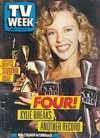
Kylie Minogue September 17-October 2: The 1988 Seoul Olympic Games are televised via satellite on Ten.
- TV Week Gold Logie Winner: Kylie Minogue (Neighbours, Ten)
- January: Ten launches its new evening series E Street and Nine launches its daytime chat shows In Melbourne Today and In Sydney Today, which later merge to become Ernie And Denise.
- January: Seven purchases the Australian television rights to the 1992 Barcelona Olympics for $A40 million — almost four times the amount Network Ten paid for the rights to the 1988 Seoul Olympic Games.
- March 20: Seven’s The Bert Newton Show and The Power The Passion attempt to knock Midday With Ray Martin from its top ratings position, with little success.
- March 31: Aggregation of regional television commences, providing local viewers with three commercial networks. Southern NSW becomes the first aggregated television market, with local networks Prime (affiliated to the Seven Network), WIN (Nine) and Capital (Ten).
- May 8: Media Watch with Stuart Littlemore begins on Monday nights on ABC.
- June: Following an investigation into Alan Bond’s conduct over a defamation settlement to former Queensland Premier Sir Joh Bjelke-Petersen, the Australian Broadcasting Tribunal rules that Bond, owner of radio and television stations including TCN9 Sydney, GTV9 Melbourne and QTQ9 Brisbane, is not a ‘fit and proper person’ to hold a broadcasting licence.
- July 3: ABC launches Countdown Revolution, a new nightly version of the former Countdown. The show received a modest following and was axed the following year.
- July 23: Following declining ratings the Ten Network is relaunched as 10 TV Australia with a range of new programs, most of which are axed by the end of the year.

10 TV Australia - ABC’s acclaimed medical drama GP begins an eight-year run.
- TV Week Gold Logie Winner: Daryl Somers (Hey Hey It’s Saturday, Nine)