Today, Australian television turns 70 years old. Although its origins dated back many years before then, with experimental television transmissions taking place as early as the late 1920s — not longer after Scottish engineer John Logie Baird first demonstrated his mechanical television system.
But, after decades of experiments and government investigation, television was finally to come to fruition in Australia in 1956. Just in time for the Melbourne Olympic Games!
The government had determined that television shall take the form of a two-tier system, similar to radio, where there would be a government-owned service (operated by ABC) plus commercial services. Television was initially to be introduced in Sydney and Melbourne, with other cities to follow.
The first step towards establishing commercial services came in April 1955 with the licencing of four stations — two each in Sydney and Melbourne. The four successful applicants were Television Corporation (Sydney), Amalgamated Television Services (Sydney), General Television Corporation (Melbourne) and The Herald and Weekly Times (Melbourne).
TCN9: Australia’s first channel
TCN9 had been conducting experimental and test transmissions since July 1956 but was the first to commence regular transmission. It’s opening night broadcast on 16 September 1956 began with a station identification announcement from John Godson: “This is television station TCN Channel 9, owned and operated by Television Corporation, 168 Castlereagh Street, Sydney. Transmitting on 195 to 202 megacycles per second from Artarmon Road, Willoughby, with an effective radiated power of 100,000 watts, vision, and 20,000 watts, sound.”
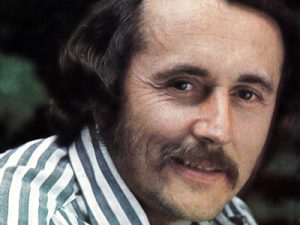
Following Godson’s introduction, Bruce Gyngell (pictured on-screen, above), a former ABC radio announcer, became the first presenter to be seen on screen with those famous words: “Good evening, and welcome to television.” Gyngell introduced the first program, a half-hour documentary This Is Television.

The Herald and Weekly Times station HSV7 (named after the newspaper publisher’s two major newspapers — The Herald and The Sun), like TCN9, began test transmissions from July with official transmission commencing on 4 November 1956. The test pattern faded from screen at about three minutes to 7.00pm with a short “lead up” to the official formalities and introduction from station compere Eric Pearce. From then there were two short pre-recorded speeches from Prime Minister Robert Menzies and State Opposition Leader John Cain (senior). Both were unable to be at the opening night but wished the new channel all the success.
Appearing live from the HSV7 studio in Dorcas Street were Melbourne Lord Mayor Sir Frank Selleck and the Federal Minister for Labour and National Service, Harold Holt, with Victorian Premier Henry Bolte declaring the station officially open.
Pearce, as the master of ceremonies, gave a brief dedication at the end of the formalities: “We dedicate this station to the full service of the community. To Australian life — the happy families in the homes — we promise to serve you faithfully and well.”

The Opening Night of ABC’s first TV station, ABN2, began with the customary test pattern, then just before 7.00pm James Dibble announced: “Stand by for the opening night of the national television service.”
A brief signature tune accompanied by a first glimpse of the animated ABC TV logo (pictured) was followed by the appearance the host for the evening, Michael Charlton: “Hello and welcome, ladies and gentlemen and children. This emblem that you have just seen is tonight the symbol of an historic occasion: the opening of the national television service, which, of course, is your television service.”
Charlton’s introduction was significant as it was his father, Conrad Charlton, who was the first to announce the introduction of ABC radio in 1932.
The opening formalities at the Kings Cross studio continued for 45 minutes, with Charlton introducing guests including Prime Minister Robert Menzies, the Postmaster-General, Charles Davidson, Senator Nick McKenna representing the Leader of the Opposition, Dr H V Evatt, the BBC‘s Director General, Sir Ian Jacob, ABC Chairman Sir Richard Boyer and ABC’s General Manager, Charles Moses.
Despite all the formality of the occasion, there was plenty to go wrong within that opening broadcast. The Age reported that during Sir Richard Boyer’s opening speech: “the camera kept switching from Sir Richard Boyer to the Prime Minister and Senator McKenna who were seated awaiting their turns to speak. The fierce arc lights caused Mr Menzies and Senator McKenna to sit with their eyes closed, and it appeared to viewers that they had gone to sleep.”
The Age also recalled: “The Postmaster-General, Mr Davidson, who also spoke, was unfortunately not photographed properly by the camera, and for a time only half of Mr Davidson was visible.”
After the opening speeches, Charlton invited viewers to enjoy a filmed performance by French violinist Christian Ferras. Viewers could see the violinist playing but there was no sound — as technicians could be heard asking, “Where’s the sound? What has happened here?”
Cue a quick change back to Charlton in the studio, who admitted: “These are the things which go wrong on an opening night.”
Very little else seemed to go to plan — including at one point an oblivious Charlton being seen smoking a cigarette as a stage hand carried a table off the set. “You’ve caught us on the hop a bit,” he explained as he waited directions from the producer about what to do next.
Later in the evening it was over to the Arcon ‘studio’ for the play The Twelve Pound Look, starring Margo Lee, John Brunskill, Joan Lord and Alexander Archdale. The production was a very modest affair, coming from the very small temporary studio, but went ahead without a hitch.

The opening night of ABC‘s Melbourne station ABV2 went ahead without anywhere near the problems encountered by its Sydney sister two weeks earlier.
The station was officially opened by Minister for Labour and National Service Harold Holt shortly after 7.00pm on 19 November 1956.
Other speakers during the half-hour ceremony included Leader of the Opposition H V Evatt, Postmaster-General Charles Davidson, Director of Posts and Telegraphs Sir Giles Chippendall, ABC General Manager Charles Moses and the vice-chairman of the ABC, Edgar Dawes.
The program was compered by ABC announcer John Royle and also included sports broadcaster Ray MacDonald interviewing Olympic athletes Chris Chataway and Shirley Strickland.
A filmed performance by visiting French violinist Christian Ferras — the same film that went to air sans audio on ABN2’s opening two weeks earlier — was played to Melbourne viewers without incident.
The first program was American variety series The Frankie Laine Show. This was followed by British police series Fabian Of Scotland Yard.

Opening night of Sydney’s second commercial channel ATN7 was under threat of not happening at all.
On Sunday, 2 December 1956, just hours before ATN was to make its official debut, a massive thunderstorm swept through Sydney. The weather brought power down across a number of suburbs — including Epping, where the new ATN “Television Centre” was based.
Not only was there no power for hours but rain managed to leak through the roof. Performers and musicians doing their rehearsals in the afternoon had to do so in front of car headlights being beamed into the studio.
The 200 VIPs making their way to the official opening function had arrived at Epping in torrential rain and had to make their way through mud tracks to get to the still incomplete building.
Power was finally to be restored to the studios barely an hour before airtime, which was just as well because the bulky studio cameras needed 45 minutes to warm up before they could be put to work.
The opening night’s broadcast began with a test pattern at 7.00pm, then the official program commenced at 7.30pm. First up was a religious greeting before the national anthem leading in to the opening speeches. Among those to welcome the station to air included chairman of the Australian Broadcasting Control Board, Robert Osborne, and the State Minister for Labour, Abram Landa, attending on behalf of New South Wales Premier Joseph Cahill.
Postmaster-General Charles Davidson then cut the ribbon stretched across the doors to Studio B in declaring the station open before yet another speech, this time by former Justice Allan Maxwell, chairman of ATN’s parent company, Amalgamated Television Services.
Then it was over to the night’s entertainment. Given the nature of the weather that afternoon it was perhaps ironic that the title of the channel’s opening gala was A Shower Of Stars.

GTV9 was the first station in Melbourne to conduct a trial program broadcast. On Thursday 27 September 1956, Royal Melbourne Show Day, 3DB radio announcer Geoff Corke became the first person to be seen on Melbourne television. He introduced a small array of short films from a temporary studio set up at GTV’s transmitter site on Mount Dandenong. The programs included a John Wayne film and a Terry Toon cartoon. “The viewing’s fine on GTV Channel 9,” Corke announced.
Nine’s official opening was to be a lavish and regal affair. On Saturday night, 19 January 1957, GTV9’s schedule started with a half-hour of celebrity interviews presented by John McMahon. The interviews were a prelude to the main event, a two-hour variety special that saw Victorian governor Sir Dallas Brooks enter Studio One by chauffeur-driven limousine before making his opening night speech in front of a packed studio audience of 400.
Radio broadcaster Terry Dear hosted the variety show which included performances by Toni Lamond and husband Frank Sheldon, ventriloquist Ron Blaskett, singer Ray Dickson with a children’s choir, indigenous performer Harold Blair, animals from Bullen’s Circus and Lou Toppano‘s 23-piece orchestra. Bob and Dolly Dyer, whose national Pick A Box show was a hit on radio and was to be adapted for TV, also made a special appearance.
The completion of the launch of the three television stations in each of Sydney and Melbourne marked the end of Stage One in the introduction of television in Australia. The Government would later announce Stage Two — expanding television to Brisbane, Adelaide, Perth and Hobart — commencing in 1959.